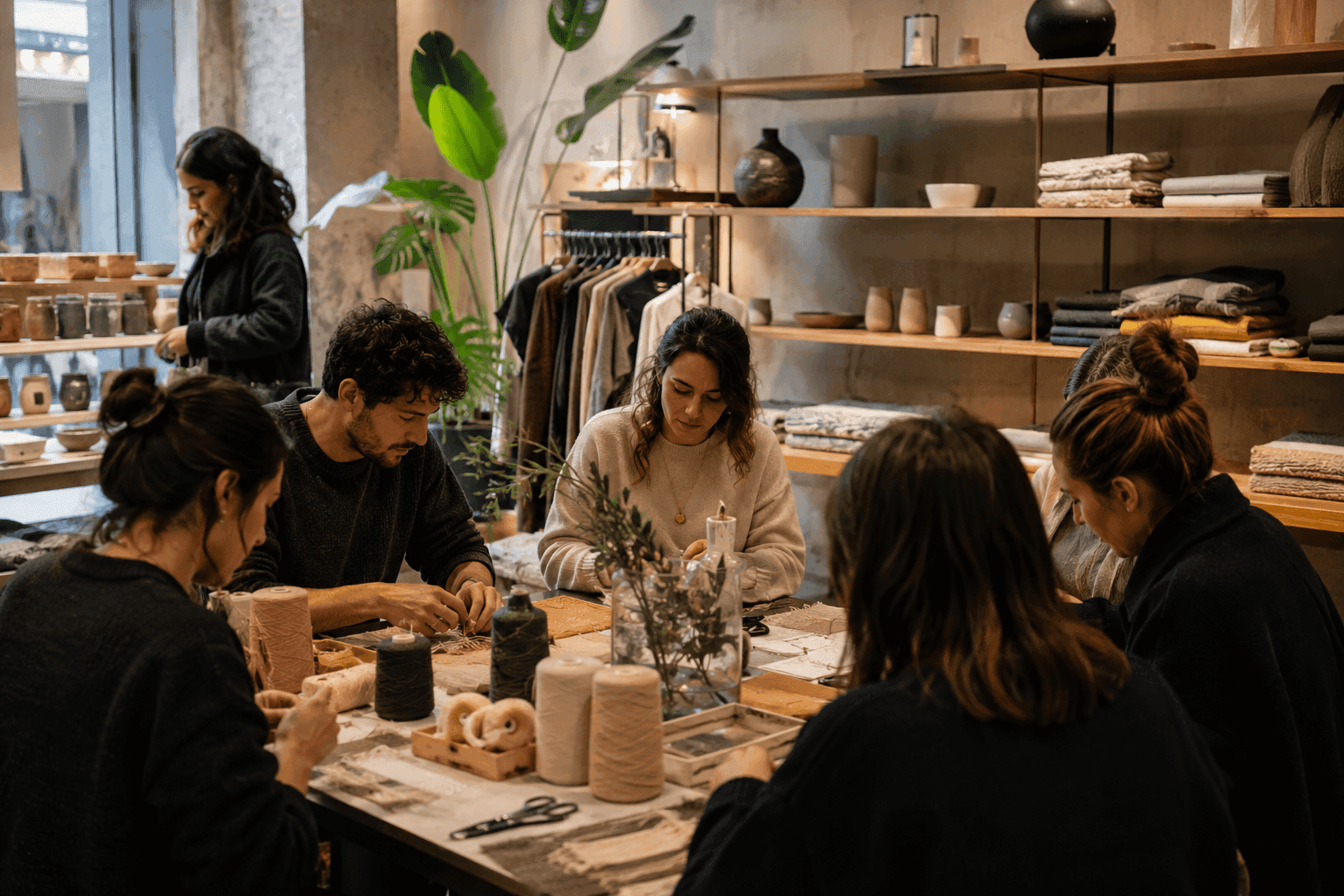
Concept stores and independent shops face a constant challenge: getting people through the door and keeping them there. In an age of online shopping, the in-person experience is their best weapon. That's where you come in: an artisan workshop hosted in-store brings the space to life, attracts a new audience and creates the kind of atmosphere that makes people want to come back. It's one of the most natural, win-win collaborations a maker can build.
For the shopkeeper, hosting a workshop isn't just an event: it's a survival strategy in a market dominated by online. The people who walk in for an experience discover the shop, its products, its atmosphere, and often come back or buy. Understanding this deep need of independent retail helps you introduce yourself not as 'someone asking for space', but as an ally who brings value: that's the right way to get a yes.
Why it works for both of you
- For the shop: an event that drives foot traffic, creates social content, builds customer loyalty and sets it apart from e-commerce.
- For you: a space that's already furnished and visible, a new audience (the shop's customers) and the credibility of being hosted by a local brand.
- For both: the chance to cross-promote on each other's channels and reach different audiences.
Which shops to approach
Look for businesses that fit your craft and share a like-minded audience: design and homeware concept stores, household goods shops, independent bookshops, gourmet food stores, florists, curated clothing boutiques. Affinity is the key: a ceramics workshop in a homeware shop makes immediate sense, both for the shopkeeper and for their customers.
How to make the first pitch
The first contact with a shop matters. Don't show up asking for a favour, but offering value: 'I run [discipline] workshops, I'd bring new customers into your space and we'd create great content together'. Show visual examples of past experiences, propose a low-risk trial event and explain what's in it for the shop (foot traffic, content, spin-off sales). The easier and more appealing you make the yes, the more likely you are to get it. And pick the right moment for the shop: a time when it wants to liven up the space, like a launch, a strong season or a city-wide event.
Agree on the details clearly
Before the event, put in writing who does what: who handles the sign-ups, how you split any takings or costs, who promotes on their own channels, what you need (tables, space, setup). The best collaborations are born from clear agreements. And think about the added value for the shop: after the workshop, participants are in the perfect spot to buy — a detail that makes your proposal even more appealing to the shopkeeper.
Domande frequenti
- How do you split the earnings with a shop?
- It depends on the agreement: the shop might host you for free for the traffic you bring, ask for a fee, or agree to split the takings. Often the value for the shop lies in the people you bring in, more than in a percentage.
- Which shops are best suited to hosting workshops?
- Those with an audience that fits your craft and a feel for experiences: design concept stores, homeware shops, independent bookshops, gourmet food stores. The affinity between what you do and what they sell is the key to success.
- What do I need to run a workshop in a shop?
- Agree on the space, the setup, sign-up management and promotion. A successful trial event is the best way to turn the collaboration into a recurring fixture.
- And if I don't have any experience to show a shop yet?
- Start with businesses you already have a relationship or strong affinity with, and propose a trial event on light terms for both of you: it's there to build your first examples and content. Once you have a couple of documented collaborations with great photos, it becomes much easier to pitch to other shops by showing what you can do.
Create your maker profile for free: a professional page that gives you credibility when you pitch to local shops and partners.
Get found and book partners on Handsome