There's a doubt that stops countless makers on the threshold: 'who am I to teach? I don't have a diploma, I'm not a recognised master, maybe there's someone better than me'. It's impostor syndrome, and it stops people who have everything it takes to run beautiful workshops. The truth is that, for most experiential workshops, real mastery of your craft and the ability to pass it on count far more than a formal qualification. Let's look at what you actually need and what's a false obstacle instead.
What you actually need to teach a craft
- Practical mastery: genuinely knowing how to do what you teach, knowing its tricks, its mistakes, its shortcuts. This is the foundation.
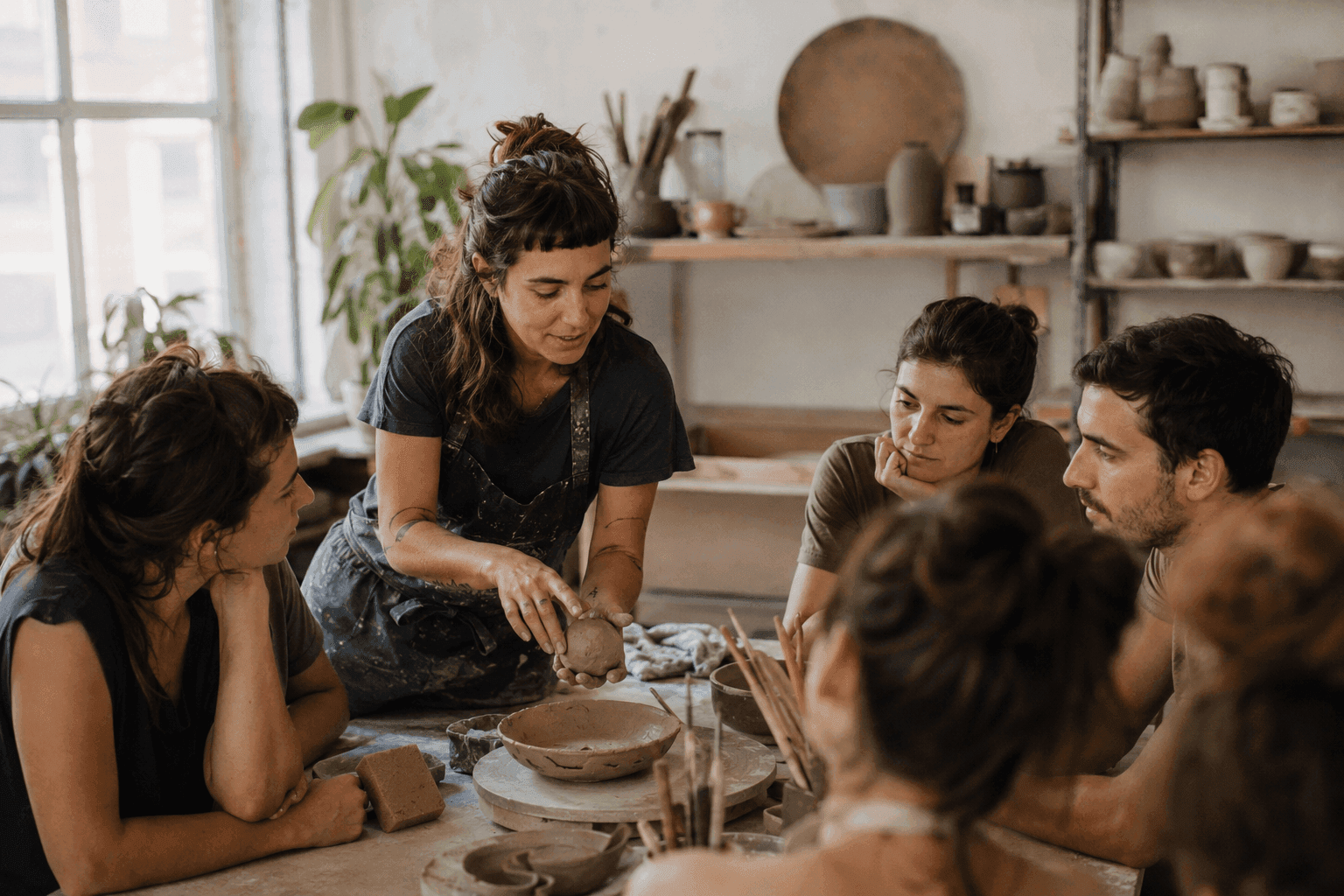
- The ability to pass it on: knowing how to explain simply, guide a beginner, have patience. It can be learned and refined.
- Attention to safety: knowing how to let people work without risk, especially with tools or materials that demand it.
- Genuine passion: enthusiasm for your craft is contagious, and it's one of the things participants appreciate most.
Notice what's NOT on this list: a diploma, a professional register, an academic title. For an experiential workshop — where the goal is to give people an experience and let them take home an object, not to issue a certification — what matters is that you know how to do it and know how to pass it on.
The false myth of the 'perfect master'
Many think they have to be the absolute best before they can teach. It isn't true, for two reasons. First: beginners don't need the world's top expert, they need someone who can guide them competently one step ahead of them — and you are, by a wide margin. Second: often someone who learned not long ago is actually a better teacher, because they remember the beginner's struggles that a great master forgot decades ago. Your skill, even if you don't feel like a 'master', is more than enough for someone starting from scratch.
But watch out for your sector's rules
An honest and important point: 'you don't need a qualification to teach' holds in general for experiential workshops, but some sectors have specific requirements to meet, especially for safety or hygiene reasons. Think of activities involving handling food, or particular settings. Before you start, find out about any rules that apply to your specific craft and about the safety and insurance aspects: it's a common-sense check that keeps you covered. For these regulatory and tax aspects, always turn to the right experts.
The real requirement is to start
In the end, what those who never start are missing isn't a title: it's the permission they haven't yet given themselves. You learn to teach by teaching. Your first workshops will show you what works, how to handle a group, how to explain better — skills no course can give you the way practice does. If you know your craft and want to share it, you already have what it takes to begin. The rest you refine as you go.
Domande frequenti
- Do I need a diploma or qualification to run craft workshops?
- Generally no, for experiential workshops: what counts is practical mastery of the craft and the ability to pass it on, not a formal qualification. Some sectors, though, have specific requirements (safety, hygiene): check the rules for your craft with the relevant professionals.
- Do I have to be the best to be able to teach?
- No: beginners need someone competent one step ahead of them, not the world's top expert. Often someone who learned not long ago is even more effective, because they remember the beginner's struggles. Your skill is more than enough for someone starting from scratch.
- Are there cases where special requirements apply?
- Yes: activities involving food or specific settings may have health, hygiene or safety rules to follow. 'You don't need a title' doesn't mean 'no rules': find out about your craft and the insurance and tax aspects with the right experts.
- How do I get over the fear of not being good enough?
- Turn it into honesty: you're not promising to be the greatest master, but to share what you know with passion and competence. And remember that you learn to teach by teaching: your first workshops will give you confidence more than any title.
Create your maker profile for free and publish your first workshop: to get started you need your skill and the will to share it, not a title.
Take the first step with Handsome