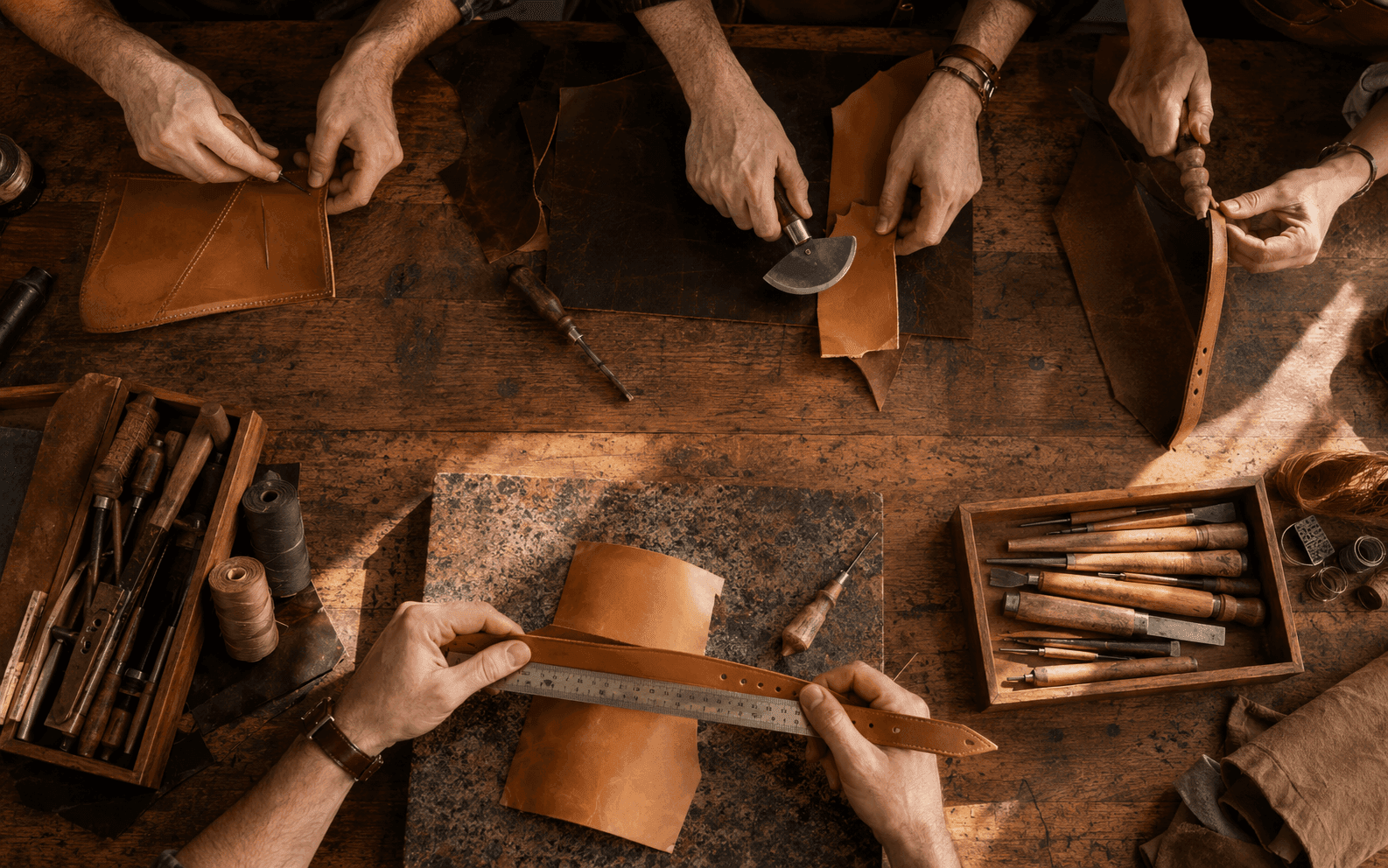
When you open your studio to participants, something happens that isn't always obvious: you take on responsibility for people who don't know your tools, your materials or the risks that feel second nature to you. What is a safe space for you, because you know exactly what burns, what cuts and what needs careful handling, is for a beginner an environment full of invisible hazards. Knowing and applying the basic principles of safety isn't red tape: it's what protects your guests, yourself and your business. An accident, beyond its human cost, can damage your reputation and have serious consequences.
Prevention comes first
The best way to handle an accident is to avoid it. Most risks in a workshop can be prevented with simple measures and good organisation:
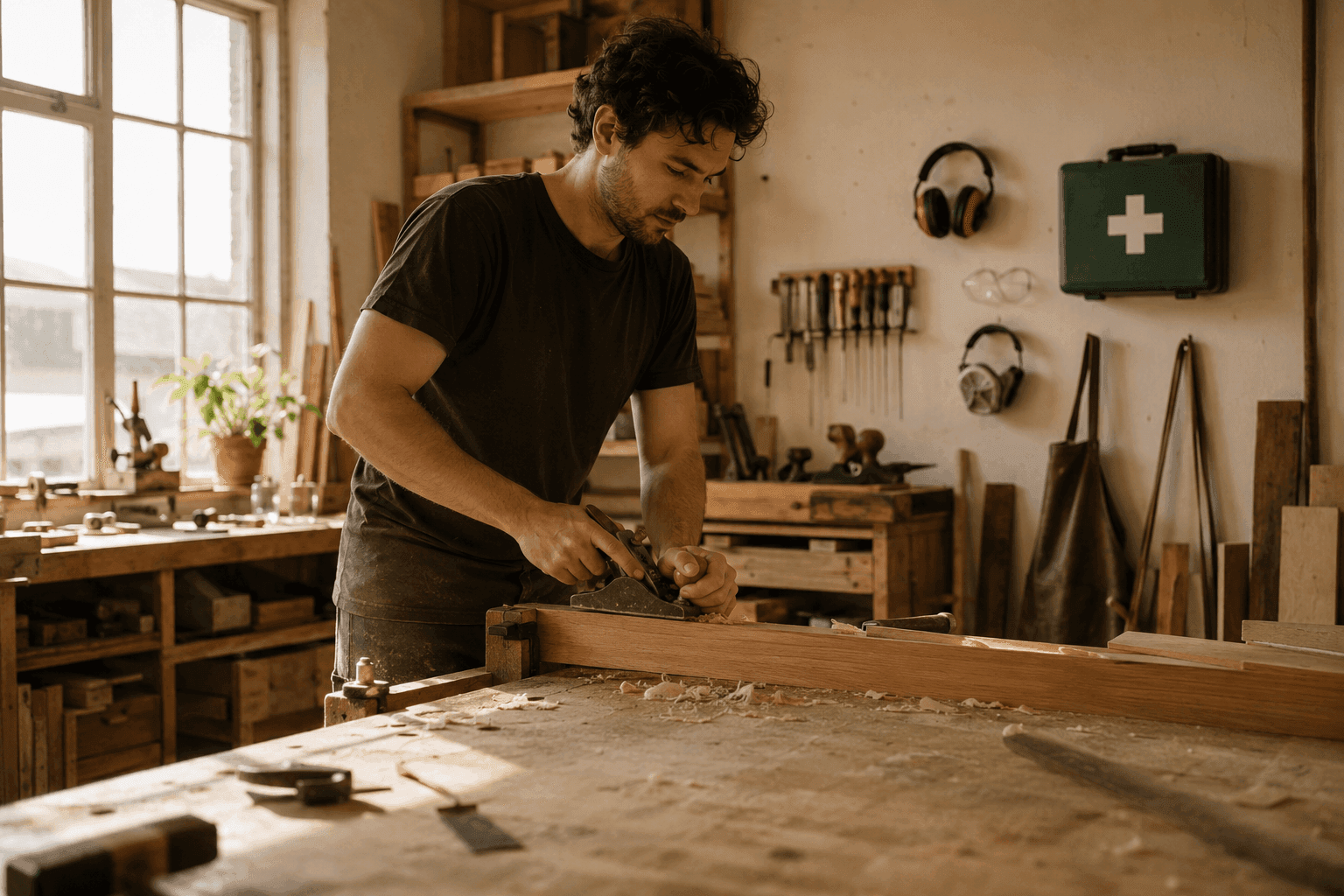
- Set up the space: tidy areas, clear walkways and well-organised workstations drastically reduce falls and accidents.
- Explain the risks before you start: a brief 'safety briefing' at the outset (what burns, what cuts, how to hold a tool) prevents most injuries.
- Provide the right protection: gloves, goggles, aprons wherever the work calls for them, and make sure they're actually used.
- Adapt to your audience: children, older people or large groups call for different precautions, tools and supervision.
- Supervise constantly: keep an eye on the riskier steps and never leave participants alone with dangerous tools or processes.
Handle the dangerous steps yourself
In many crafts there are operations best NOT delegated to participants: contact with high-temperature materials, the use of dangerous machinery, certain chemical processes. The common-sense rule is clear: the riskiest steps stay in your hands, while participants do the safe and rewarding part. This doesn't diminish the experience — if anything, it often makes it flow more smoothly — and it eliminates the biggest risks. Designing your workshop around this principle is one of the most effective ways to make it safe from the very start.
Be ready for small mishaps
Even with the best prevention, small accidents can happen: a little cut, a mild burn, a splinter. Having a well-stocked first-aid kit within reach and knowing how to use it for minor things is the bare minimum. Knowing how to react calmly — stopping the work, tending to the person, reassuring the group — makes the difference between a small hiccup handled well and a moment of panic. Knowing the emergency numbers and being clear on what to do in case of a more serious event matters just as much.
Insurance and the rules of your field
Beyond practical safety, there are formal aspects you shouldn't overlook. Adequate insurance cover (for liability towards participants) is something every artisan who welcomes the public should seriously discuss with a professional. Likewise, some crafts have specific requirements — for example those involving food or particular environments. Looking into the rules that apply to your specific activity before you start protects you from nasty surprises. These are checks you do once that give you peace of mind for good.
Domande frequenti
- What are the safety priorities in a workshop?
- Prevention comes first: a tidy space, a brief safety briefing at the start, the right protection, adapting to your audience and constant supervision. On top of that, it's best to handle the most dangerous steps yourself, leaving participants the safe and rewarding part.
- Do I need to know first aid?
- It's strongly recommended: a first-aid course of just a few hours gives you confidence and the ability to handle small mishaps well. Always keep a well-stocked kit and know the emergency numbers. For proper training, turn to the relevant bodies.
- Do I need insurance to run workshops?
- When you welcome the public, cover for liability towards participants is something to seriously discuss with a professional. Along with checking the specific rules of your field, it's a common-sense step that gives you peace of mind.
- Won't talking about safety scare participants?
- Quite the opposite: a few words to say that safety is a priority, with protection ready and the space well kept, reassures and conveys professionalism. People feel they're in good hands, not in danger.
Create your profile for free and tell the full story of your workshops, from the activities to the precautions: people arrive informed and at ease.
Welcome participants safely on Handsome