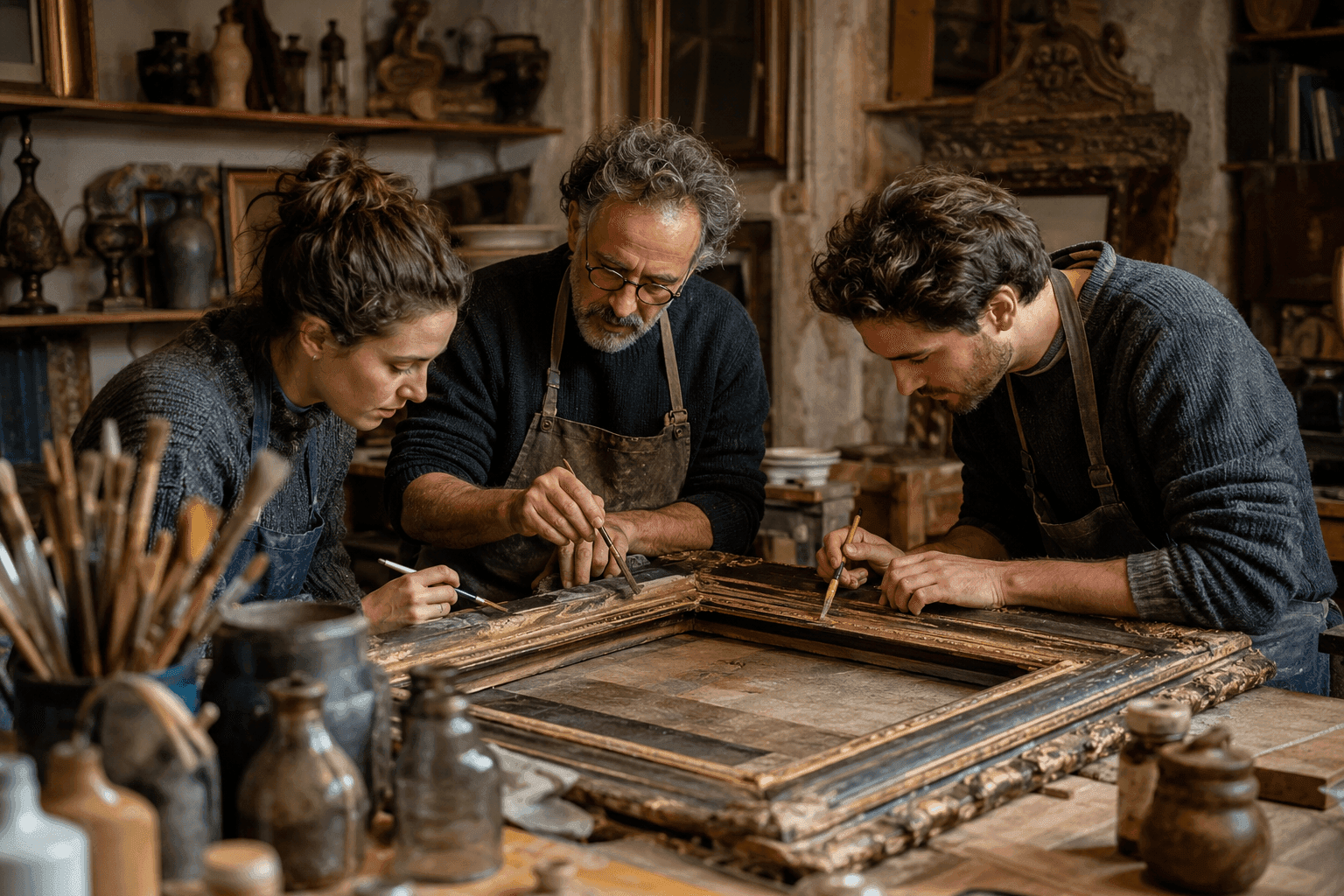
Restoration is a technical, niche craft, but it carries a powerful message that today's audience feels deeply: saving an object instead of throwing it away, giving new life to what's damaged, pushing back against throwaway culture. Turning this philosophy into an accessible experience is a precious opportunity, because it combines craftsmanship, history and a value people are actively seeking.
Restoration also has a rare advantage: it's still uncommon in the workshop landscape, so it sets you apart instantly. While many disciplines have plenty of similar offerings, a restoration experience — especially one tied to kintsugi or to rescuing objects — intrigues and draws in anyone looking for something different and meaningful. Add to that the sustainability message, ever more keenly felt, and you can see why this is an opportunity still largely unexplored.
Choose an experience within everyone's reach
You can't teach professional restoration in a single session, but you can offer a meaningful taste of it. The goal is to let people live the gesture and the satisfaction of 'making it new again', with a contained, rewarding project:
- Kintsugi: the Japanese technique of repairing broken ceramics with golden lines, celebrating the crack instead of hiding it. It's one of the most beloved and symbolic 'restoration' experiences.
- A small makeover of a wooden object: cleaning, light sanding, finishing, a fresh patina.
- Rescuing and repairing a small object brought by participants: extremely high emotional charge.
- Gilding or decorating a detail: a refined, striking gesture.
Kintsugi: the perfect gateway
Kintsugi deserves a paragraph of its own because it has become a phenomenon: it repairs broken ceramics by highlighting the cracks with gold, turning damage into beauty. It works wonderfully as a workshop because it pairs an accessible hands-on gesture with a deep philosophy (the beauty of imperfection, the story of objects). It's symbolic, photogenic and speaks to a wide audience.
A philosophy that speaks to our time
Restoration taps into two great currents of the moment: the desire for sustainability (repairing instead of throwing away) and the search for meaning and slowness in a fast world. Kintsugi, in particular, carries a philosophy that captivates: the idea that wounds and imperfections, instead of being hidden, can become the most beautiful part of an object — a metaphor people feel about themselves too. Being able to tell this dimension, without preaching, transforms your workshop from a hands-on activity into an experience that leaves a mark and gets talked about long afterwards.
Sell the meaning, not just the technique
Restoration as an experience sells above all through its narrative: sustainability, respect for objects and their history, the slow pleasure of repairing. Tell people where your passion comes from, show some 'before and after', explain the philosophy. This is what turns a technical workshop into an experience people remember and recount.
Domande frequenti
- Can I run restoration workshops if I specialize in just one area?
- Yes: it's better to offer an experience focused on what you truly master (ceramics, wood, gilding) than a generic course. A well-crafted taste of your specialty is worth more than a smattering of everything.
- Is kintsugi suitable for beginners?
- Yes, in its experiential version it's accessible and much loved, because it pairs a simple hands-on gesture with a fascinating philosophy. It's often the ideal gateway into the world of restoration.
- Can participants bring their own objects?
- Where the technique allows, it's a huge added value, because the object carries personal meaning. Do communicate in advance, though, what can be restored within the time of the session and what instead needs professional intervention.
- Isn't restoration too small a niche to fill workshops?
- On the contrary, being uncommon is a strength: it sets you apart and attracts people looking for rare experiences full of meaning. Symbolic techniques like kintsugi also have a broad appeal, well beyond restoration enthusiasts. By communicating the philosophy and the sustainability well, you reach a wide audience.
Create your artisan profile for free and put your art of restoration in front of people looking for authentic experiences full of meaning.
Give your craft new life on Handsome