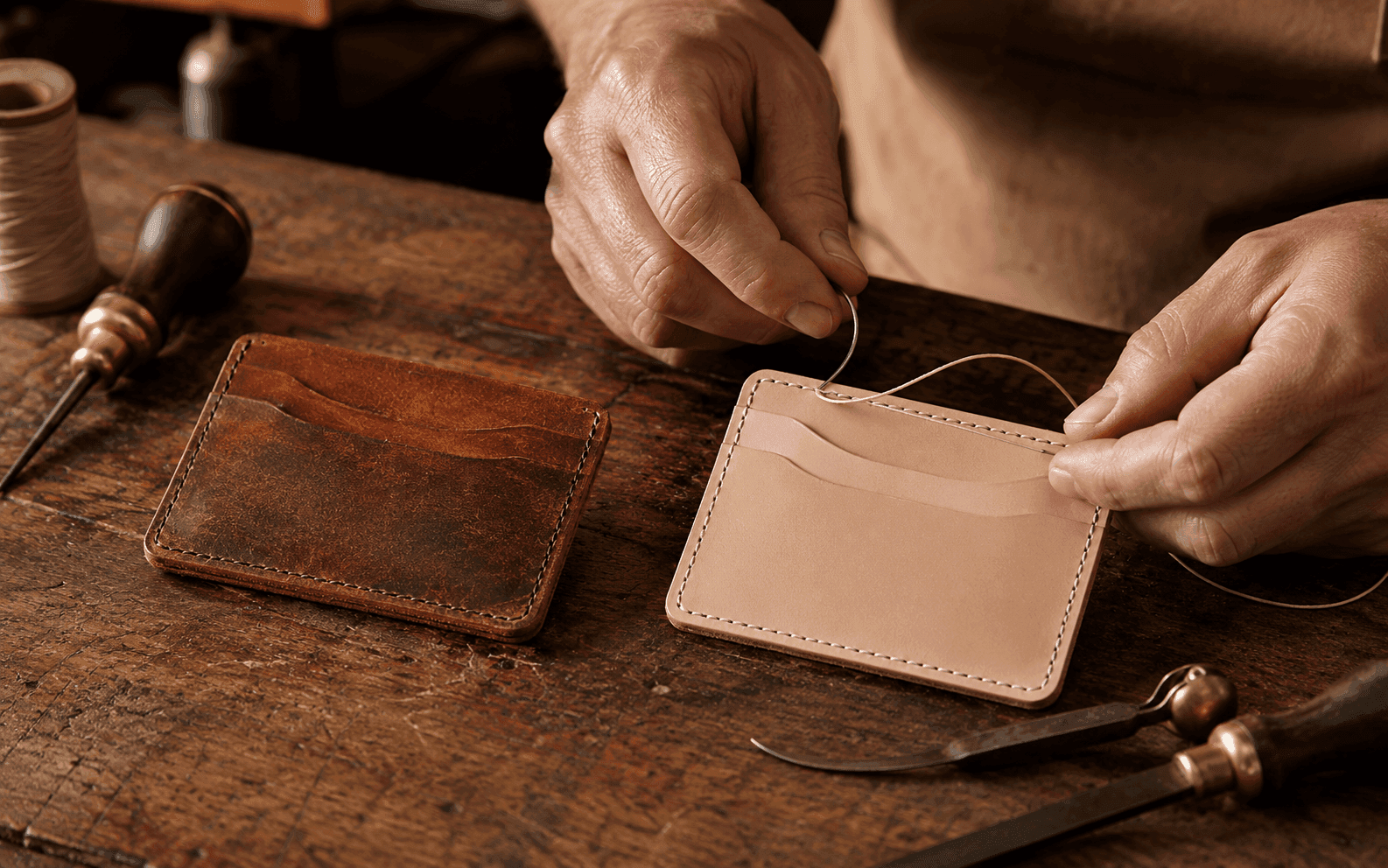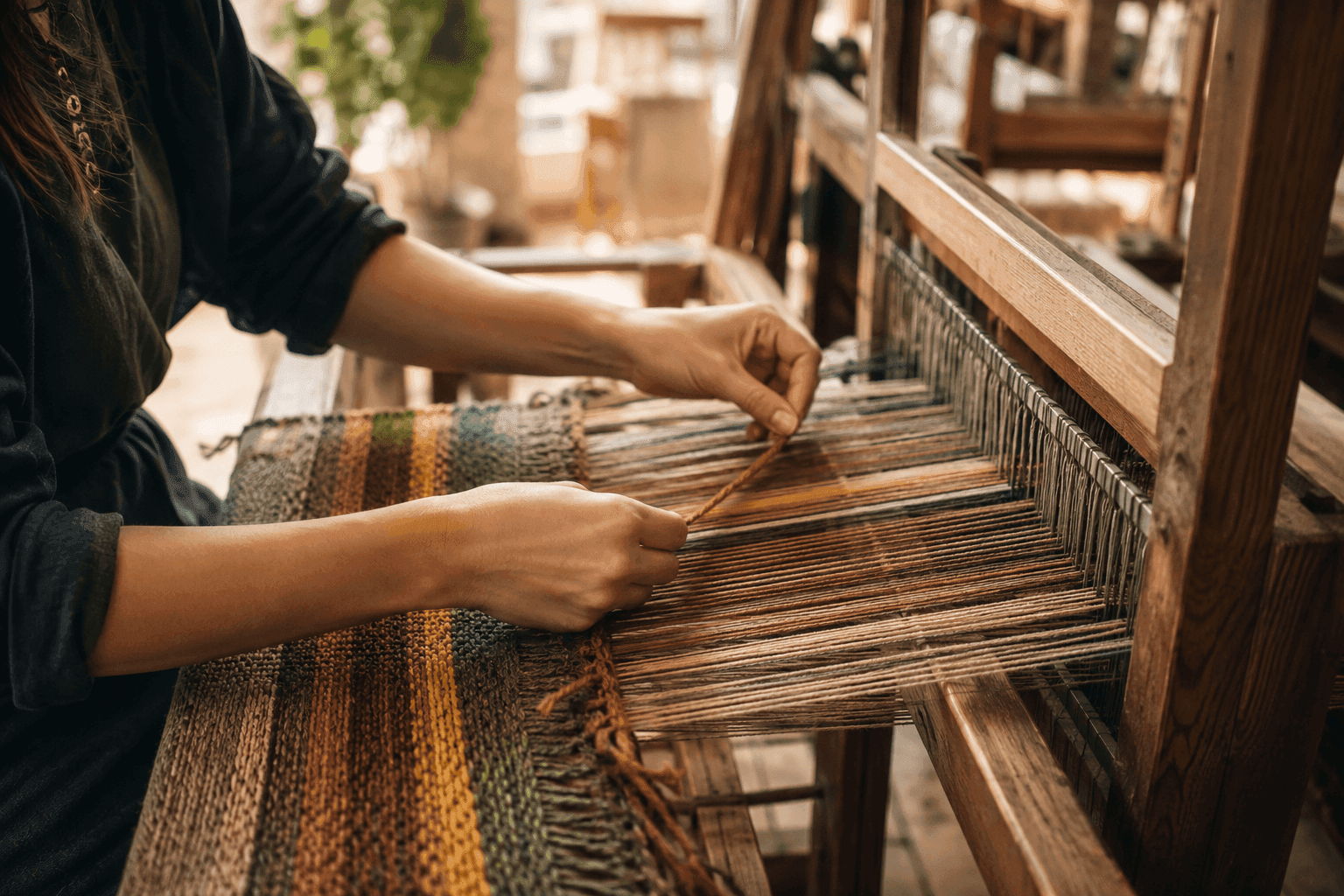
Weaving has an almost hypnotic power: the repeated gesture of interlacing, the fabric growing row after row under your hands. It's an activity that relaxes and gives a visible, immediate sense of satisfaction. The secret to turning it into a great workshop is starting with the right tool: the frame loom — simple and light — is the perfect doorway into this ancient craft.
Weaving also strikes a nostalgic, cultural chord: it's one of humanity's oldest crafts, it evokes grandmothers, the looms of old houses, the slowness of a time that's gone. That emotional weight is a value: people who join don't just learn a technique, they reconnect with a tradition. Knowing they're getting in touch with an ancient gesture makes the experience richer and more worth talking about.
The frame loom: simplicity that works
Unlike big professional looms, the frame loom is inexpensive, portable and immediately easy to grasp. It lets you teach the fundamentals of interlacing in a few hours and make a small decorative tapestry. It's also ideal for workshops because you can prepare several in advance, already warped (with the vertical threads tensioned), so the session starts straight away with the fun part: weaving.
What to make
- A small wall tapestry: the classic project, decorative and very photogenic.
- A trivet or a doily: useful and finishable in a short session.
- A piece with fringes and knots: introduces different textures and great visual impact.
Teach the basic interlacing (plain weave), then show two or three techniques for adding texture — rya knots for fringes, soumak for raised detail. Just a few variations give participants a creative vocabulary to personalize their piece.
From the frame loom to more ambitious formats
The frame loom is the perfect doorway, but not the only horizon. Once your audience gets hooked, you can offer a path: from the first small tapestries to bigger projects, from plain weave to more elaborate techniques and textures, all the way to introducing — for the most curious — more structured looms. This natural progression lets you create levels and bring back people who've already learned the basics. Even staying on the frame loom alone, by varying sizes, materials and decorative complexity you have material for many different workshops.
Lean into the effect and the slow pace
Weaving sells beautifully as a slow-down experience: an hour or two in which the hands work and the mind calms. It's also extremely photogenic, both the loom in progress and the finished tapestry hanging from a wooden dowel. Encourage photos: they become a spontaneous showcase that draws in new people curious to try.
Domande frequenti
- Do I have to provide the looms?
- Yes, and it's an advantage: frame looms are inexpensive and you can prepare them already warped, so the session starts straight away with weaving. State on the listing whether the loom stays with the participant or is on loan for the session.
- How much can you weave in one workshop?
- With a small frame loom and the warp already set up, in a couple of hours you can finish a small tapestry or a trivet. Bigger projects need a multi-session format.
- Is weaving suitable for complete beginners?
- Very much so: plain weave is extremely simple and gives results right away. By adding a few texture techniques, even someone who has never woven goes home with a personal, striking piece.
- Does weaving work for groups and events?
- Yes: it's relaxing, sociable and not noisy, so it's perfect for evenings with friends, team building and group moments. Preparing the looms already warped in advance keeps the session smooth even with more people, and the photogenic result generates spontaneous shares that bring in new participants.
Create your free profile and introduce your weaving workshops to people looking for a creative, handmade break.
Weave new bookings on Handsome