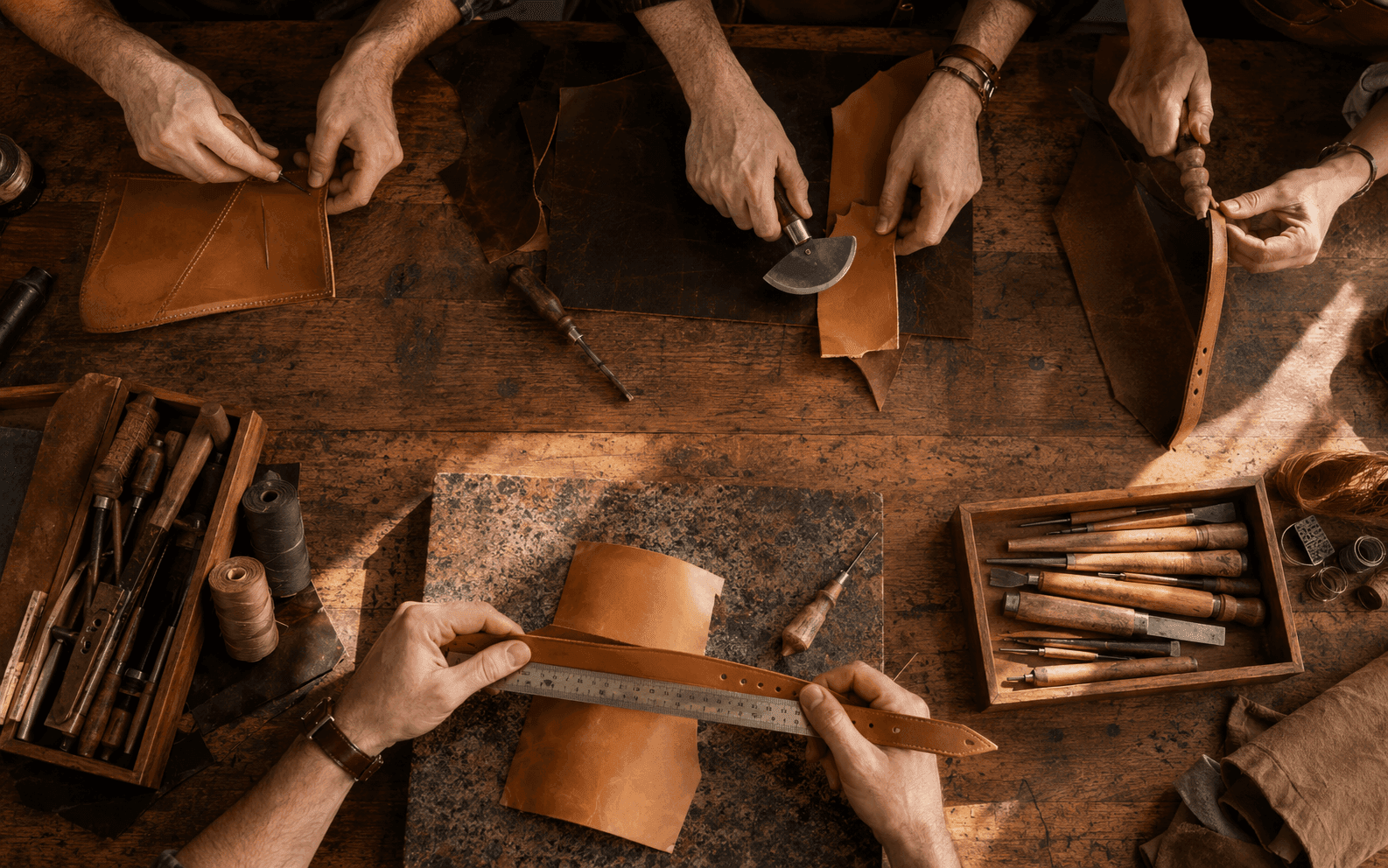
Woodworking is captivating because it combines hands-on gesture and a tangible result: at the end you take home a real object, made of wood, made with your own hands. But for a workshop that works, the challenge isn't teaching everything: it's choosing the right project. The ideal object for beginners is useful, can be finished within the session and can be made safely with manageable tools.
Wood has an almost universal appeal: the scent, the warmth to the touch, the idea of building something solid and lasting. It's a craft that draws a broad audience, from total newcomers to those who've long dreamed of 'learning to make things with their hands'. But precisely because 'real' woodworking can feel intimidating, the job of the maker who teaches is to make a first taste accessible and rewarding, without scaring people off with complexity.
What makes a project beginner-friendly
- It can be completed within the workshop, leaving room for the finishing and no rushing.
- It needs few tools and movements, ones that someone who's never worked wood can master.
- It has a real use: an object that will become part of daily life is worth more than an exercise for its own sake.
- It's good-looking when finished: that visual satisfaction is what makes people share the experience.
Project ideas that work
Some tried-and-tested ideas for introductory workshops, to adapt to your own style and equipment:
- A small cutting board or trivet: few cuts, plenty of finishing, a result that's useful in the kitchen.
- A shelf or a wall organizer: introduces assembly and sanding.
- A wooden frame: simple movements and an object that's easy to personalize.
- A plant holder or a decorative box: guided assembly and great visual impact.
- A hand-carved spoon or utensil (green woodworking): captivating, low-tech and in high demand.
Adapt the project to your audience (and the season)
The same object doesn't suit every audience. A cutting board is perfect for adults, but with children you need even simpler, safer projects; a couple or a group of friends enjoy decorative, personalizable objects they can show off; someone looking for a gift appreciates something well-finished and nice to wrap. Seasonality helps fill the calendar too: small themed objects (wooden Christmas decorations, cutting boards to give as gifts, spring planters) meet demand at the right moments of the year.
Take care with the finishing: that's where the magic is
With wood, the difference between a 'beginner's piece' and a 'beautiful object' almost always comes down to the finishing: sanding, oiling, a small personal touch. Set aside time for this stage in your plan: it's the moment when participants see their object transform and feel the pride they'll go on to talk about.
Domande frequenti
- Do you need expensive equipment to run woodworking workshops?
- Not necessarily. Many beginner projects can be made with hand tools and a few basic machines. Invest first in safety and a well-organized workspace, then possibly in more advanced equipment.
- How do I handle safety with inexperienced people?
- Favor hand tools, give clear demonstrations before every movement, provide proper protective gear and supervise constantly. The fewer dangerous tools there are, the calmer and more repeatable the workshop becomes.
- Which project should I choose for a first workshop?
- A simple object that's useful and looks good finished: a small cutting board, a frame or a carved utensil. The key is that it can be completed at a relaxed pace within the session, finishing included.
- Can I run woodworking workshops without a fully equipped workshop?
- For introductory projects, often yes: many beginner objects can be made with hand tools, a sturdy worktop and a few basic machines. You can also think about 'light' formats (like carving or assembling pre-cut pieces) that need minimal equipment and even lend themselves to working on location.
On Handsome you create your profile for free and reach the people looking for exactly that kind of woodworking experience in your area.
Publish your woodworking workshops